06 February 2015

Spike in road casualties blamed on in car gadgets

The increased use of in car gadgets, hands free phones, Sat Navs and digital music systems are being blamed for an increase in accidents on the UK's roads.

The rate of accidents involving death or serious injury had been on the decline for the previous 3 years, but in the 12 months to September there was a 4% increase, reaching almost 25000.
Incidents involving cyclists showed the biggest increase, with 3500 accident involving death or serious injury, an increase of 8%.
Officials suggested that the increase was driven by a rise in the number of cars taking to the road over the past 12 months.
The RAC have suggested that many motorists are becoming distracted by the sheer number of gadgets installed on the dashboard of new vehicles. Its own polling has shown that mobile phones are a 'major source of distraction' for more than a quarter of their drivers - rising to 40% among those in their late 20s.
In all 1730 fatalities were recorded in the 12 month period, up by 1%. 24360 people were involved in accidents resulting in death or serious injury, a rise of 5%, and there were 192910 casualties of all types, a rise of 5%.
This is only the third time in 30 years that the number of deaths and serious injuries had increased.

If you have suffered an injury as a result of a road accident that was not your fault, speak to Cycle Accident Helpline - the No Win No Fee experts - today for a no obligation chat.
Help is only a click or call away.
21 January 2015

'Bike Sense' being developed by Jaguar Land Rover

Jaguar Land Rover have released a video showing their Bike Sense warning system that literally taps the driver on the shoulder to warn of a passing cyclist.
The system detects when a cyclist or motorcyclist is passing on the inside or outside - and even has a warning when the driver is about to open the door into the path of a passing cyclist.
Following last weeks post re the developments being done by Volvo on cycle safety it is great to see that the manufacturers are getting behind cycle safety.
The great thing about the JLR version is that no additional equipment is required by the cyclist or motorcyclist - Bike Sense links sensors on the outside of the car to a computer. The sensors detect movement and the computer processes the signals to identify approaching cyclists and motorcyclists.


The video give a better idea of how the system works - and can be seen here:

https://www.youtube.com/watch?v=faRHh2hIKlg

Jaguar said that Bike Sense would be able to prioritise hazards in urban driving situations, when a motorist can be surrounded by those on two wheels, and pedestrians.

Potholes - what can you do if you suffer an injury on your bike?

Following last weeks National Pothole Day - we look at the issue from the point of view of the innocent cyclist - injured as a result of a pothole.
Some of you may recall the widely reported case of Alan Curtis, who received £70000 in compensation following a particularly nasty accident with a pothole in Rickmansworth. His full story can be found here: http://bit.ly/1rnYPch
If you come off your bike as result of hitting a pothole, and suffer an injury, do you have a right to claim compensation? The answer, as so often in legal matters, is - it depends.
Councils owe you a duty of care to maintain the roads – this means that they are responsible for the maintenance and repair to keep the highway ‘in a fit state to accommodate the ordinary traffic which passes or may pass along them – that is cars, lorries, buses, motorcycles, cyclists etc'
So far so good. But does that mean that if you have an accident caused by a pothole you have a claim?

As with all claims – each will be dealt with on its own merits, and a judge would consider whether the highway was in a dangerous condition. The Judge will consider whether it was forseeable that the condition of the highway could give rise to an injury.
Over the years, in tripping claims, it has become accepted that a defect of over 1 inch (the height of a 50p piece) on a pavement would satisfy this test. With potholes in the road there is no such clear criteria - and evidence is everything.
In practice this means that you should take photographs of everything, preferably showing measurements. You need to show not only the width of the pothole, but also it's depth. The position of the pothole within the road will also be important so - as long as it is safe you would want close up photos showing measurements -and photos showing the pothole's position in the road.
So - if it's a 'big' pothole are you home and dry?


Unfortunately not! Under Section 58 of the Highways Act a highway authority may, in its defence, prove it had taken such care as in all the circumstances was reasonably required to ensure that the highway was not dangerous.
In practice this means that the highway authority would need to provide evidence of regular inspection and maitenance to show that they had taken reasonable steps to detect each defect and repair it within a reasonable time. What is considered reasonable will depend upon the nature and character of the particular road - the size and position of the pothole.
It's not unusual for claims to be rejected in the first instance - but take Mr Curtis' claim as an example - when you have a good case it is worth pursuing to the end.

For help and advice with any Cycle Accidents please visit cycleaccidenthelpline.com - or our associated blog - which has many helpful articles. Alternatively call 0800 7569708 - free (from landlines)
08 January 2015

New Cycle Tech at the CES

The international CES is a global electronics and consumer technology tradeshow that takes place every January in Las Vegas.
This year a couple of cycle products have caught the attention of The Times.
They have highlighted a 'smart' pedal that helps to trace bicycle thieves. The pedal houses a GPS tracker and a SIM card that work together to alert the owner to an attempted theft - or to the whereabouts of a stolen bike.
The aluminium pedal is also able to track speed, distance and calorie count over the course of a bike ride, and send this data to the cyclist's smartphone.
The pedal requires no batteries because it generates its own power from kinetic energy absorbed during a ride.

The pedal has been developed by French company Connected Cycle  - and the pedal prevents tampering by thieves as it can only be removed with a special key.
The company website can be found here: http://connectedcycle.com/
Also highlighted was a concept bicycle helmet developed by Volvo, designed to make city cycling safer. The helmet links with a rider's smartphone app that transmits their location to nearby vehicles fitted with the company' City Safety system.
This warns drivers when a cyclist is nearby, and warns cyclists when they are in a driver's blind spot.
It also analyses the routes of both vehicle and bike, and predict when an accident is about to happen. It can automatically apply the car's brakes and illuminate a warning light inside the cyclist's helmet to avert a collision.
Fortunately there does seem to be a lot of research going into cycle safety - specifically related to HGV's, as the Volvo product does seem to be attempting to tackle the same problem as the British Cycle Alert. cyclealert.com
It is good to see that the world of Tech is concentrating on the everyday issues faced by cyclists - as well as the design and development at the elite level.
11 November 2014

Olympic cyclist in hospital following pothole crash


Following our previous posts regarding the dangers of potholes, and the claims arising from injuries sustained in pothole accident we were very sorry to hear of the accident involving Olympic Gold medallist Dani King.

Dani was injured in a crash when a fellow cyclist hit a pothole during a training ride. King, 23, was taken to hospital by ambulance, and has suffered 5 broken ribs and a collapsed lung, but was fortunately well enough to tweet from her hospital bed ‘Crashed out of training yesterday resulting in five broken ribs and a collapsed lung. Being looked after by the amazing NHS ICU in Wales’.

Dani's father has said that Dani feared spinal damage after he crash, reporting that she was put on a spinal board following the incident. Dani could not feel her feet at one stage, and said to her father she was frightened to cry because she thought she was going to die she was in so much pain.

Dani was out with her usual training partners when one rider hit a pothole concealed by a puddle, bringing down a number of riders in the group. The Olympic and World track champion hit the ground, with another rider falling on top of her.

She is a columnist for the Times, and they reported that she has previously written of her awareness of the dangers of cycling on the roads:-
‘I ride my road bike everyday of the week anyway for the track, whether that’s riding to the track and back or on a training ride.There’s always going to danger on the roads, where you’re sharing space with cars, and it is more likely that you’re going to crash but if I thought too much about that I’d be a nervous wreck. Worrying about crashes won’t help me’.

We have previously written about claimants who have successfully pursued claims in respect of injuries caused by potholes – please see our article about here.


Dani thanked her followers for their messages of support and said that she wished the British riders good luck in the track cycling World Cup in Mexico.
14 October 2014

BoJo Urged not to give in to 'old men in limos'


The Olympic Gold medalllist Chris Boardman has urged Boris Johnson not to give into pressure from 'old men in limos', and scrap plans for the cycle superhighways across London.
Following the mayor's proposals for a 'Crossrail for bikes' across the capital, there has been a mixed response from companies and the public alike.
Chris Boardman wrote in an article on the Guardian website that 'There is an intense lobbying operation to destroy the plans, led by just one company, Canary Wharf Group, and by the City of London Corporation'.
Michael Welbank, planning Chairman of the City of London Corporation, said they supported the plans in principal, but claimed the proposals are 'heavily biased towards cycling' - something which Boardman said was like 'opposing Crossrail on the grounds that it is heavily biaised towards trains'.

Full details of the TFL consultations can be found here:-
http://www.tfl.gov.uk/campaign/cycle-superhighway-consultations
19 September 2014

Cyclists – Happier, healthier and harder working

Cyclists – Happier, healthier and harder working
 
There are lies, damn lies and statistics – as the saying goes. But here at Cycle Accident Helpline we are happy to rely upon a couple of recent surveys, concerning cyclists.
Cycling is the mode of transport that makes people most happy, according to a new study using figures from the American Time Use Survey.
Researchers investigated how emotions varied during travel, and by travel methods. Eric Morris, from Clemson University, South Carolina, who led the study, said ‘We found that people are in the best mood while they are bicycling compared to any other mode of transportation’. He added that cyclists tended to be a self selected group who were enthusiastic about their mode of transport.
Then we come to some UK research – which suggests that employees who commute to work are more likely to be successful once they arrive as they are fitter, more alert and take fewer sick days.
A study by Cyclescheme spoke to 2500 cyclists and 100 employers about the effects of cycling on their workers. More than two thirds of employers reported that cyclists were more energetic, and more than half said they take less sick days.
Almost half said that those who cycled to work we more productive.
For the cyclists themselves – 82 per cent said they felt less stressed, and 77 per cent felt more focused.
So there you have it, happier, healthier and harder working – cycling – it’s a revolutionary movement.
12 August 2014

Ride London - a celebration of cycling - DESPITE the weather

Last weekend saw the streets of London closed for the annual Ride London weekend.
I was lucky enough to take part in the Ride London-Surrey 100 for a second time this year - though that was badly hit by the after effects of Hurricane Bertha. The amateur event was shortened from 100 miles to 86 miles to avoid the more dangerous parts of the route - Leith Hill and Box Hill.
On Saturday an estimated 60,000 took part in a 10 mile ride through central London and the festivities included the largest bicycle bell ensemble........
Cyclists make their way down The Mall from Buckingham Palace towards Admiralty Arch in the Prudential RideLondon Freecycle along

Sunday was the day for the more serious events - the Ride London 100, followed by the 'Classic' event for elite riders.
I started my ride at 7:50 - when it was fairly drizzly, but not too bad. By the time I reached Hampton Court, about 25 miles in - the heavens well and truly opened - it was like cycling through a power shower. The speed of the downpour resulted in lots of flooding en route - all taken in its stride by the great marshalls and volunteers.
The rain did not seem to put off the supporters - who were out along most of the route - and really did spur on the cyclists.
With 25 miles to go the sun came out - I dried out - and even had the sun glasses on!! It stayed dry until I had 1 mile to go - the sky went very dark, and then the heavens opened again - the wind picked up, knocking over hoardings in the final stages - bt I got through - soaked - again - but delighted to have got through without a puncture - and without coming off.
The whole day was brilliantly organised - and any accidents I did see were being well attended by medics and marshalls.
I was really sorry to hear afterwards that a cyclists had died of a cardiac arrest on the climb up to Newlands Corner near Guildford. My heartfelt condolences go to his family and friends. I was relieved to see that the cyclist behind him has been able to reassure the family that he was really well looked after by the medics and the Police. RIP Kris Cook.
More than 20,709 cyclists defied the wind and the rain to complete the course, making it the biggest ever cycling sportive held in the UK.
Gary Watson and Lisa Russell, of Raynes Park even managed to get married en route - stopping of at Richmond Park's Pembroke Lodge to tie the knot, before completing the course!


08 August 2014

The Prudential RideLondon Cycling Show 2014

Ahead of a weekend celebration of cycling in London I attended the Prudential RideLondon Cycling Show 2014  - partly because you need to attend to collect your pack for the RideLondon 100 - but the show is well worth a visit in it's own right.
Most of the major cycling brands were there - and nearly everyone was giving really good discounts on essential kit for the weekend
Loads to do, things to try, and hourly stunt riding shows - something for everyone - and the kids are definitely well catered for - wth lots of photo opportunites - on Wiggo's throne, at the front of the peloton etc. - and lots of
You have the opportunity to get  last minute massage before Sunday, ad you can wash it all down with a free non alcoholic Erdinger!
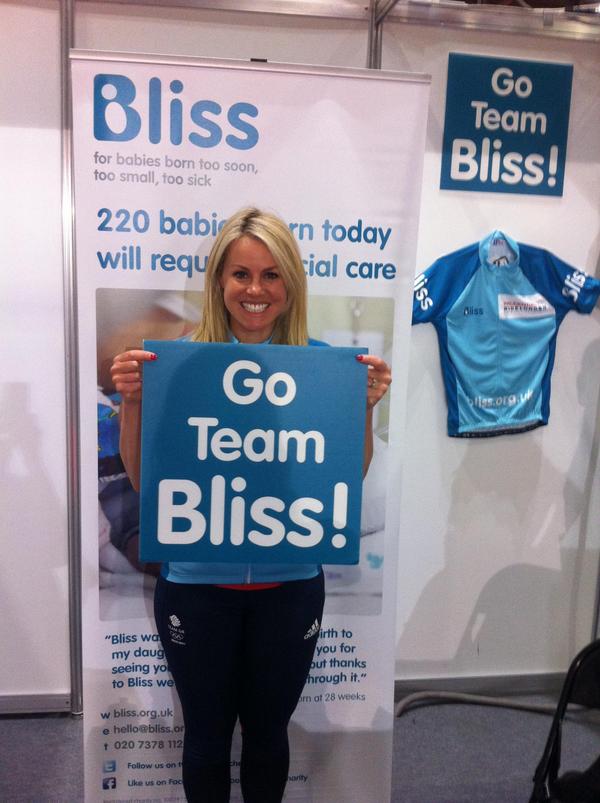
and some celebrities along for the ride as well... Go Chemmy!
Embedded image permalink
The event was opened yesterday by Martin Johnson - who is also taking part on Sunday.

Having been looking forward to this weekend for months it is a bit of a shame that it looks like the weather is going to take a real turn for the worse on Sunday.
Lets hope it doesn't affect the Ride London event - or the professionals Classic - which Bradley Wiggins is due to tak part on on Sunday after the RideLondon 100.
Good luck to everyone taking part - see you on the route!


01 August 2014

Trailwalker 2014 - 4 People | 100KM | 30 HOURS

Last weekend I took part in the Trailwalker.

It involves a team of 4 walkers, covering 100km of the South Downs Way, within 30 hours. Our team, myself, Neale Sterio, Michael Thaysen - Sorenson and Leon Emes, with our fantastic support team of Mette and Debs, set off with the intention of being under 24 hours – how hard could it be??
 
There are 10 checkpoints along the way, where you can meet your support teams - and they are all manned by the Gurkhas and Oxfam volunteers. Our start time was 10:00am on Saturday, so after a breakfast prepared by the Gurkhas, we set off. We got off to a great start, the pace was good, but the temperatures were very high.

We were going brilliantly – faster than our training walks - looking like we would come in well under the 24 hours, when the heat began to take it's toll. Between stage 3 and 4 we had some heat stroke - which meant slowing down, and being much more careful about taking on fluids and food. After an extended stop, we got back on the trail, and were going well again. The support of our crew, and the Gurkhas and Oxfam volunteers was invalauble - but the support that the teams showed to each other out on the course was what really kept us going.

The sunset as we reached the mid point of our walk  - 50k in.

We walked through the night - and that was when the checkpoints became even more important. When you have been walking in the dark for two hours – and then you can hear the strains of The Proclaimers blowing across a valley – you know it’s not too much further to your next break.

And with welcomes like this you need to try to keep smiling!

As the day wore on the walk started taking it's toll on our feet, with everybody starting to get blisters. I have never suffered with them before, and had thought they would not be a problem. By stage 7, I had a few, but we had managed to treat them at the checkpoints.

Our support team, and the Gurkhas kept us going. A hot meal at 3:00 in the morning helped – but everytime we stopped in was more difficult to start again – getting reacquainted with  the pain...

The night walking was fairly hypnotic – just concentrating on the 6 feet in front of you and keep moving. The sun rise was another breakthrough – but we still had a long way to go.

Between Checkpoint’s 8 and 9 my blisters got to the point where I could barely walk – and I was not sure how we – or I – would get to the finish. In the end the team insisted we try to sort them out at the side of the track – so with compeed, bandages, plaster and gaffer tape, 'Dr' Leon mended my feet as best we could and carried on.
24 hours was out of the question – so we reset our target for 26 hours – and carried on.
Through very gritted teeth we pushed on – we had fantastic support from all of the teams around us. At each stop you would see more people having to pull out – but we pushed on through.
We made it in 25 hours 58 minutes.

A specials thanks to our support team, Mette and Debs, who not only supported us all the way round, with very little sleep, but also had to listen to our war stories all of Sunday night.
To Leon, who was a late replacement in our team, for being pacemaker, medic and motivator – if you were in the trenches you would want him next to you. To Michael, for keeping up his humour, and countyside ‘warnings’ all the way round, and to Neale, for suggesting this in the first place, and for lying to me for the last 10k about how far we actually were from the finish line.
If you had asked me on Sunday if I would do I again the answer would have been no – today, as my blisters are at a point when I can almost walk normally again – I’m not so sure.
Thanks to everyone who sponsored us – we smashed through our initial target , and our second and third targets. If you didn’t get a chance to sponsor us it’s not too late – it would be great to break the £3000:

10 July 2014

Hit and Run Driver dramatically caught on camera

Hit and Run Driver dramatically caught on camera
 

A cyclist being hit by a hit and run driver would not normally make the news – but this case was a little different – as it was all caught on camera by the unfortunate cyclist.
Patrick Knetemann was using a ‘bullet’ cam on his handlebars when the incident occurred, and therefore had footage of the driver swerving across his path, the collision occurring, and the guilty driver driving off whilst Mr Knetemann was left lying in the road.
Fortunately an off duty paramedic was soon on the seen, and took Mr Knetemann to hospital.
You would think the driver would be ‘banged to rights’ – but unfortunately not.
It transpired that the vehicle had a false registration number.
At the moment the Thames Valley Police are investigating – but the driver is currently untraced..
Mr Knetemann suffered fractures to discs in his neck and bruising to his upper body.
So what of Mr Knetemann’s injuries and the damage to his bike?
With the driver untraced, and probably untraceable, can Mr Kneteman do anything about his injuries and losses?
Fortunately the answer is yes, thanks to a body called the Motor Insurers Bureau (MIB). The MIB was set up to protect the innocent victims of uninsured and untraced motorists.
It is a government body, funded by all motor insurers.
The MIB is known as a fund of last resort -meaning that they only become involved where no other source of compensation is available. The amounts claimable against the MIB are not the same as the full amount that could have been claimed had the guilty party been identified, but it remains a safety net for those, like Mr Kneteman, who find themselves the victim of such criminal behaviour.


At Cycle Accident Helpline we are specialise in cycle accidents, including those involving uninsured and untraced motorists. If you want to discuss a claim, or possible claim, or just have a query – please don’t hesitate to contact us for free, no obligation advice.
01 July 2014

Roads 'too dangerous' for cyclists BBC poll suggests

Roads 'too dangerous' for cyclists BBC poll suggests

CyclistsOnly a third of Britons agreed roads in their local area were designed to be safe for cyclists

Related Stories

Half of British adults believe their local roads are too dangerous to cycle on, a BBC poll has suggested.
The Tour de France, the world's biggest annual sporting event, starts in Leeds on Saturday and will take in Harrogate, York, Sheffield,Cambridge and London.
But cycling campaigner Martin Lucas-Smith said "people felt unsafe to cycle" in many UK places.
The Department for Transport (DfT) said it had "doubled funding for cycling to £374m to help deliver safer junctions".
Mr Lucas-Smith from the Cambridge Cycling Campaign, added "things like narrow cycle lanes" and "badly maintained roads" led to cyclists feeling unsafe.
"We'd like to see proper allocation of space on these roads which can almost always be achieved simply by a bit of redesign, so people can cycle safely and easily."
Cyclist in the countryside"Cycling is more popular than ever before" said Olympian Chris Boardman
The poll showed older Britons were more likely than their younger counterparts to believe the roads were too dangerous: 61% of those aged 65 and over, compared to 45% of 18 to 24 year olds.
Chris Boardman, Olympic medallist and British Cycling policy adviser, said: "It's clear...people don't feel safe when riding their bikes on our roads.
"In order to rectify this we need a clear commitment from government and local authorities to prioritise the safety and needs of cyclists in all future transport schemes."
The DfT spokesman added: "Cycling isn't just great exercise, it has wider benefits for the environment and the economy, which is why we are committed to ensuring more people feel safe enough to use two wheels."

Poll results

QuestionAgreeDisagreeDon't know
BASE: 3,012 BRITISH ADULTS - SOURCE: COMRES
It is too dangerous to cycle on the roads in my local area
52%
47%
1%
The roads in my local area are well designed to be safe for cyclists
34%
64%
2%
Employers don't do enough to encourage and facilitate cycling to work
55%
37%
9%
The Tour de France starting in Britain this year has encouraged me to cycle more
20%
78%
2%
The research also showed that more than half of adults questioned said they felt employers failed to encourage cycling to work.
Claire Francis, head of policy for the walking and cycling charitySustrans, said: "Employers who encourage cycling can increase their profitability and have employees who take fewer sick days but without decent facilities and support, many businesses miss out on these benefits.
"Cycle parking and showers in an office should be as common as a printer and a coffee machine.
"But we also need the government to deliver better infrastructure and slower speeds on our roads, so that people feel safe to leave home on their bike."
Scene from Le Tour de France 2012Cycling is on the "crest of a wave", said Olympic gold-medal cyclist Ed Clancy
Only one in five of people interviewed said the Tour de France had encouraged them to cycle more - but with the Grand Depart happening in Leeds, nearly a quarter of people in Yorkshire and the Humber said they had been inspired to spend more time on their bike.
Ed Clancy, a double Olympic gold-medal cyclist, said: "I live in Yorkshire and the Tour de France is a massive deal up there right now.
"Perhaps it's now the next step in making cycling more popular having a home Tour de France if you like. It's the sort of thing that's once in a generation...so it's definitely worth giving it a watch.
"We're really riding the crest of the wave and the more people that get involved in cycling, not just as a sport but for the commute to work or just having a laugh on the maintain bike at the weekend, is good all round."
03 June 2014

15mph Cycle Streets proposed by Department for Transport


Robert Goodwill, the Minister for Cycling, is championing a scheme proposed in a recent government consulation, for Cycle Streets, with a 15mph speed limit.
In these streets, in addition to the speed limit, it would also be forbidden to overtake cyclists, and Police would be aboe to issue a fixed penalty fine o £100.00 and 3 points to motorists who ignored the 'no overtaking' rule.
This is currently being considered by some 'Cycling Cities' and London.

The Minister said:
'I am pleased to announce that today we are launching a consultation on revised Traffic Signs Regulations and General Directions.
These updated regulations will include many measures developed in discussion with cyclists.
These include low-level signals for cyclists, new types of crossings for pedestrians and cyclists, and new designs of advanced stop line. We will also trial new dedicated cycle streets. This will provide councils the opportunity to put cyclists on an equal footing with motorists on popular cycle routes by banning overtaking.'
It is good to see that cycling remains high on the political agenda, especially given the recent series of cyclist's deaths in London. The hope would be thatthese changes would not only improve safety, but encourage more cycling in our cities.
Powered by Blogger.

Popular Posts